


OpenAI
Model ecosystem reference
A provider category Rangoon concepts can keep visible as target context.
Why here: Teams need target assumptions available for review during capability planning.
In development
Rangoon is in development. Its planned workspace groups profiles, skills, workflows, connectors, model targets, tests, and versioned artifacts. These records make capability inputs, dependencies, and test context available before a deployment plan is accepted.
Interface evidence
Interface concept with illustrative data and integration marks.
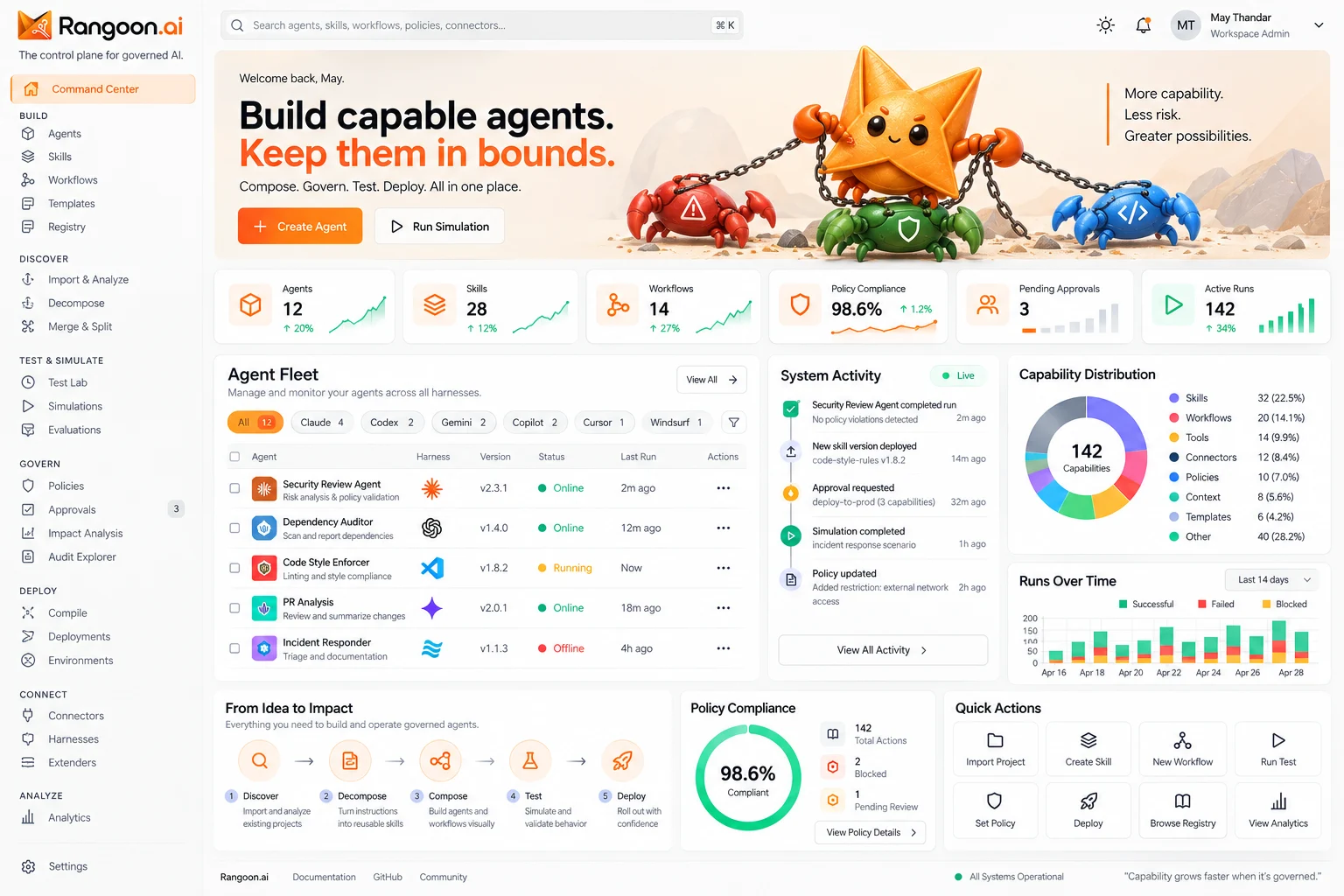
A central surface can keep profiles, skills, workflows, targets, tests, and versioned artifacts visible before a team plans deployment.
Command center interface concept for profiles, workflows, versioned artifacts, and evaluation context.
Technology reference
Rangoon concepts make model-target context visible while teams compose, inspect, test, and plan capabilities.
Reference ecosystem marks show planning context only. They do not claim a shipped integration, partnership, compatibility certification, or supported target.
Model ecosystem reference
A provider category Rangoon concepts can keep visible as target context.
Why here: Teams need target assumptions available for review during capability planning.

Model ecosystem reference
A provider category Rangoon concepts can keep visible as target context.
Why here: Teams need target assumptions available for review during capability planning.

Model ecosystem reference
A provider category Rangoon concepts can keep visible as target context.
Why here: Teams need target assumptions available for review during capability planning.

Model ecosystem reference
A provider category Rangoon concepts can keep visible as target context.
Why here: Teams need target assumptions available for review during capability planning.

Semantic interoperability / In development
Rangoon is the first consumer of VUSL, a shared language for describing capabilities and observations across platforms. Its planned core is independent of Rangoon and LNSAT.
VUSL is in development. Each connected system retains its own permissions and responsibilities.
About VUSLCapability lifecycle
Three graphs
Composition shows what a capability contains. Execution describes the planned path from a composed capability to a target and its test evidence. Governance records compatibility, policy requirements, and version relationships that need review before deployment planning.
These graphs make configuration and change legible. LNSAT evaluates the exact consequential action, scope, and approval required for execution.
Authority boundary
Rangoon keeps profiles, skills, connectors, targets, tests, and compatibility visible. LNSAT is the separate execution-authorization and evidence layer for an exact consequential action. Exact authority comes from a bounded request, policy decision, and scoped approval.